Winter Annuals: Species Selection, Management, and Benefits
October 6, 2026
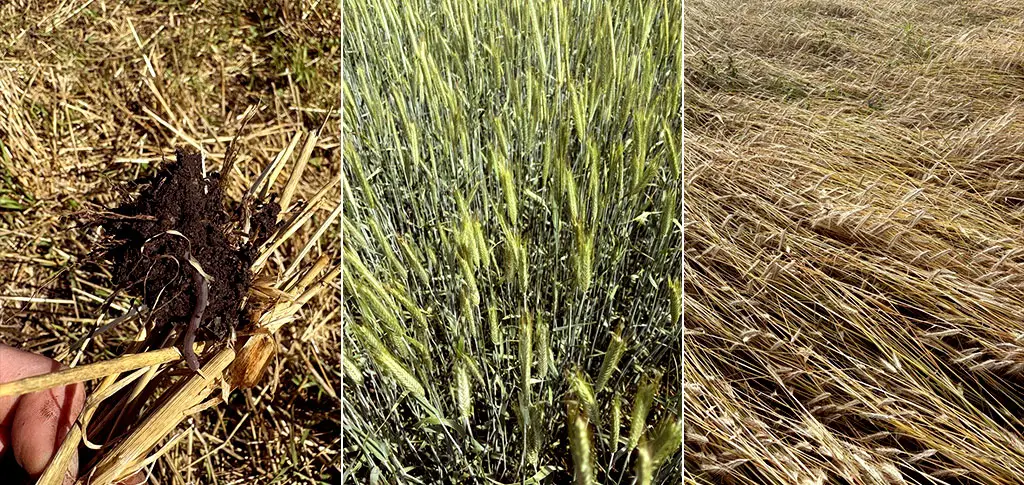
Winter annuals can be a valuable soil health addition to farming operations. Integrating winter annuals introduces a living root during the off-season, which reduces soil erosion risk, builds soil organic matter, and improves nutrient cycling. In addition, winter annuals offer flexibility within a rotation; they can be grazed, harvested as silage, used as cover crops, or harvested as a cash crop. Below, we highlight some of the options available:
Winter Triticale
Winter triticale, a cross between wheat and cereal rye, provides excellent forage quality with strong winter hardiness. It establishes well in cool conditions and remains productive during both early spring and late fall. Triticale often outyields winter wheat as a forage and is well suited for silage, greenfeed, or grazing. Because of its high yield potential, it performs best on soils with moderate to high fertility.
Best Use: Silage, grazing, and high-yield forage production.
Benefits:
- Strong winter hardiness
- High forage yield potential
- Good feed quality
- Flexible harvest timing
Winter Wheat
Winter wheat is a versatile option that can provide both forage and grain production while protecting soil through the winter. Compared to cereal rye, it is less aggressive in the spring, making it easier to manage or terminate. Winter wheat performs best when seeded into standing stubble that traps snow and protects the crop from winter injury. Canola, barley, and oat stubble provide suitable protection, while pea, lentil, and bean stubble increase the risk of winterkill.
Best Use: Forage or grain production.
Benefits:
- Good winter survival when properly established
- Potential for grain harvest
- Moderate forage production
- Easy integration into crop rotations
Hybrid Fall Rye
Hybrid fall rye is known to be the most winter-hardy cereal grain and is often the first crop to resume growth in the spring. It is an excellent choice where winter survival is a concern and can provide productive grazing opportunities early in the season. Hybrid fall rye can be grazed before stem elongation and still produce a grain crop under adequate moisture conditions. While fall rye produces acceptable forage, triticale and winter wheat may offer higher forage quality. When it comes to seed selection, hybrid fall rye varieties offer improved root systems, stronger weed competition, better nutrient uptake, and yield increases of 20 to 40 percent over conventional varieties.
Best Use: Early spring grazing and dual-purpose grain production.
Benefits:
- Exceptional winter hardiness
- Earliest spring growth
- Strong weed suppression
- Excellent nutrient scavenging
Cereal Rye
Cereal rye is a commonly used winter annual because of its reliability and ability to establish quickly in cool fall conditions. It is highly effective at capturing residual nutrients and reducing nutrient losses over winter. Its dense root system improves soil structure, increases water infiltration, and helps prevent erosion. In the spring, cereal rye produces large amounts of biomass, making it ideal for grazing, forage harvest, and cover crop applications. Its vigorous growth also suppresses weeds effectively. However, timely termination is important when planting a following cash crop to avoid competition for moisture and nutrients.
Best Use: Cover cropping, soil protection, and grazing.
Benefits:
- Excellent winter survival
- High biomass production
- Improved soil structure
- Effective nutrient retention and weed suppression
Benefits of Implementing Winter Annuals
Adding winter annuals to a forage or cropping system provides several key advantages:
- Improved soil health through increased organic matter and biological activity.
- Reduced soil erosion by maintaining ground cover during vulnerable periods.
- Better nutrient management through nutrient capture and recycling.
- Increased forage availability and extended grazing seasons.
- Improved weed suppression through dense plant growth.
- Greater flexibility for grazing, silage, hay, grain harvest, or cover crop use.
Finding the Right Fit
As you plan future rotations, consider where winter annuals may fit into your operation or where existing acres could be expanded. Small additions can improve productivity, protect soil resources, and enhance long-term profitability. Taking advantage of winter annual opportunities today can help you build a more resilient and sustainable operation for the future.