Category: Sustainability
Regenerative agriculture may sound like a fancy new term-but it’s simply quantifying what many farmers have been doing for years. If you’ve read our page on Regenerative Ag and how it is more than just sustainability, then you know that growers in partnership with Grain Millers have embraced Regen Ag and have already begun to reap its benefits–from a reduction in carbon emissions to helping with growers’ bottom lines.
But what exactly is Regenerative Agriculture, what does the philosophy entail, and how does our company and its growers support it? In the last several years, customers, farmers, and other stakeholders have shown increasing interest in making tangible steps toward reducing their carbon footprint. Regen Ag takes sustainable agriculture practices a step further by instituting and tracking the results of carbon-reducing farming methods.
In addition to reducing or negating carbon output and contributing to growers’ bottom lines, farmers have been using regenerative agriculture practices for years to build and maintain soil health and reduce soil erosion.
Regenerative agriculture practices also sequester carbon from the atmosphere, which can result in a negative carbon footprint by retaining more carbon than is emitted. How do we do this?
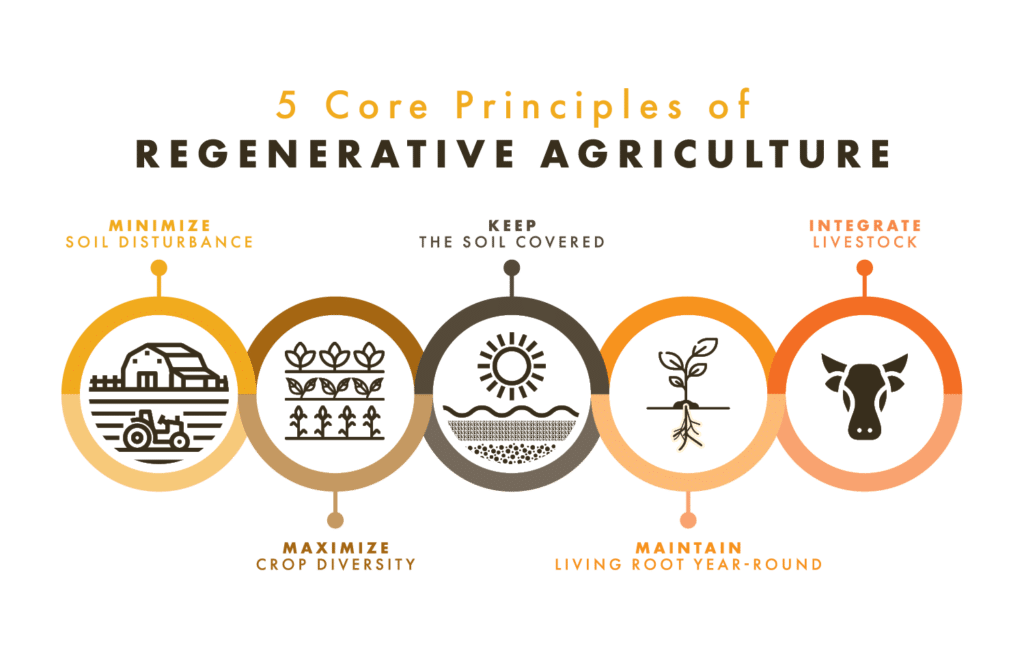
Through crop rotations, the use of cover crops, and reduced tillage. Some farmers have been instituting these practices for years; however others have not adopted them for various reasons. As part of our program, Grain Millers supports farmer-led organizations that provide resources to farmers–from cost shares to mentorship programs and field days. In partnership with Practical Farmers of Iowa, farmers in our program have access to resources, mentorships, and cost share programs that make sustainable farming even more accessible.
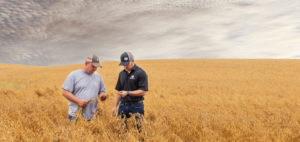
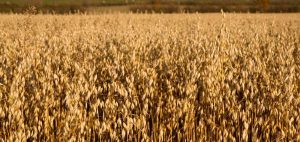
One of our growers, Ben Dwire, has been a member of our Grower Incentive Program for three years. Ben and Kristi, his wife, are both fourth generation farmers. They started their own farm together in 2005. Their farm is currently on a three-year rotation of corn, soybeans, and small grains–predominantly oats. In addition to supplying oats, Ben also raises soybeans for Grain Millers. He says that sustainable agriculture practices that include a small grain, such as oats, reduces crop disease and pests by breaking the pest cycle. Growing oats also allows them to get a full season of a cover crop, which vastly improves soil health. “Oats just make all the other crops look good,” Ben says.
Especially in times of drought, no-till and cover crop practices allow the soil to absorb the small amount of water that collects during brief bursts of rain. The residue that builds up on the soil’s top layer gives the water sufficient time to sink in.
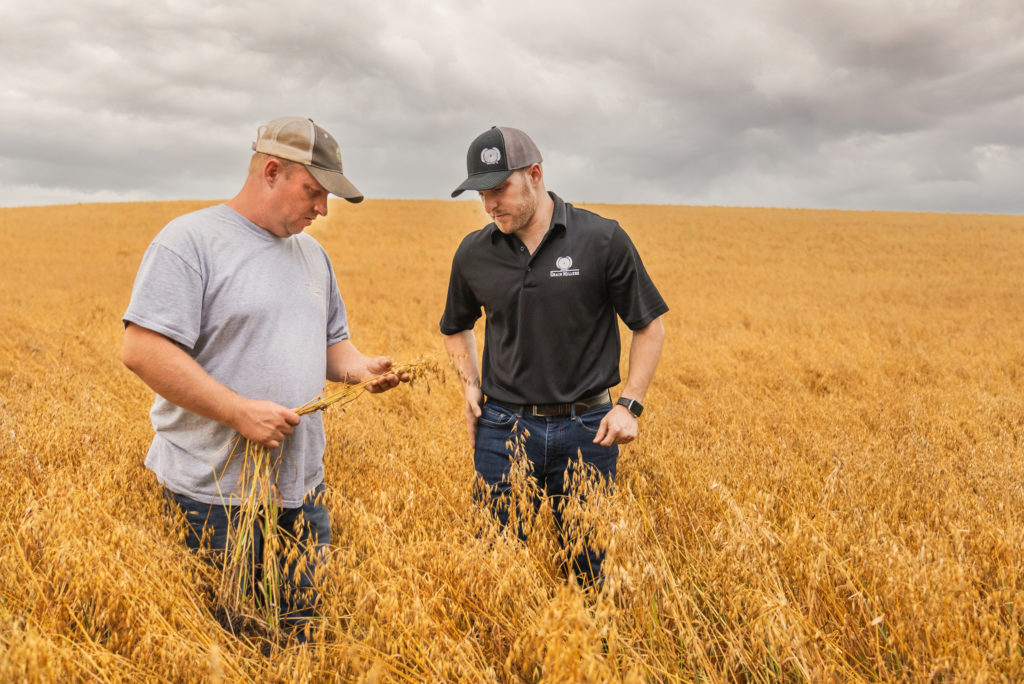
As for growers who would like to get started with Regenerative Ag practices but may not know where to begin, Ben says that a program like Grain Millers + Practical Farmers of Iowa is a great place to start. The program takes some of the risk out of sustainable agriculture practices through cost share for cover crops and through educational programs that provide information to those starting out. “It’s nothing that anyone couldn’t do. There’s no special secret,” Ben states.
So why do environmentally friendly farming techniques matter for Grain Millers customers? Our consumers everywhere increasingly want to know that the brands they’re buying from are taking steps to reduce their emissions. The supply chain starts with our growers–and when they’re farming with Regen Ag practices, the products your customers eat are contributing to a more sustainable future.
We are excited to share more information with you about our growers and the Regen Ag program. Contact Sophia Weiss with any questions at Sophia.Weiss@grainmillers.com.